UniFi Login: How to Log In to Your UniFi Controller
Accessing Your UniFi Network Application (Controller)
Accessing the UniFi Network Application (also known as the UniFi Controller) is straightforward; it is essentially a web service running on the device where the Network Application is installed. This can be either a standalone installation of the application, or the app itself can be hosted inside UniFi OS. The Network Application is the central hub where you manage all your UniFi network devices, such as access points, switches, and gateways.
First, ensure you are on the same local network as the device where your Network Application is hosted. If you are remote, ensure the correct routing or VPN is in place so you can reach it.
Hands-on
To log in, open a web browser and enter the IP address or Fully Qualified Domain Name (FQDN) of your management device in the URL bar. This could be a hardware device like a Cloud Key, a Dream Machine, a Cloud Gateway, or a standalone Network Application installed on a Windows or Linux virtual machine.
If you are running the controller on a local machine or a cloud VM and do not know its IP address, you can find it easily:
- Windows: Open Command Prompt or PowerShell and run ipconfig. Look for the "IPv4 Address".
- Linux: Open your terminal and run ip a or hostname -I, depending on your distribution.
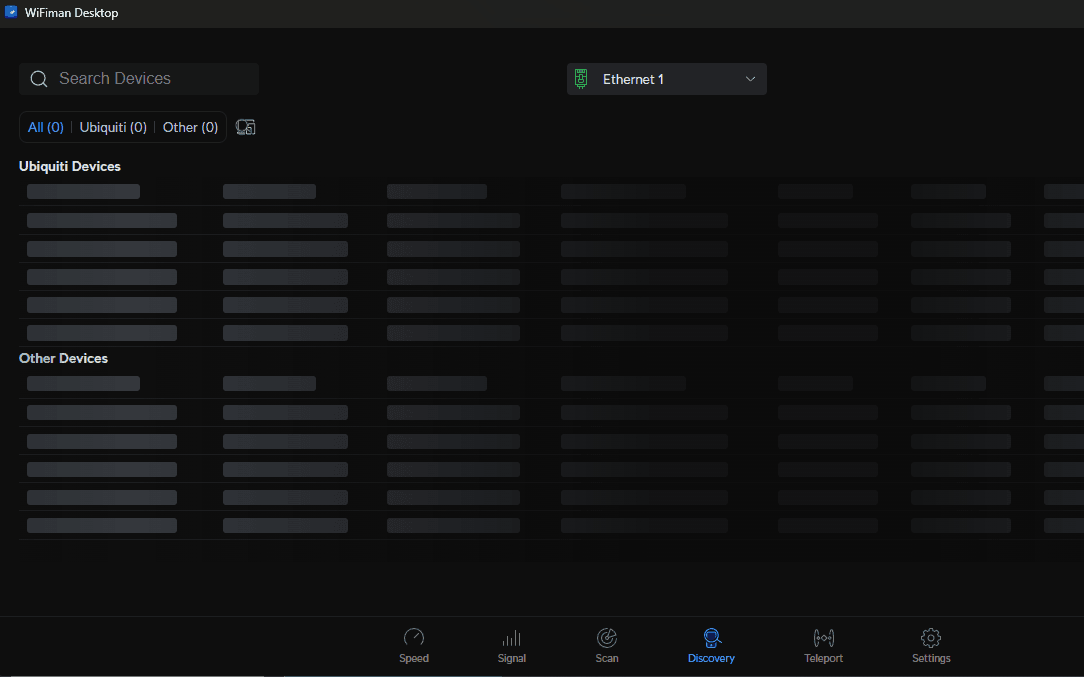
If you use a hardware console and you don’t know the IP, you can use the WiFiman application. It’s available for Windows, Linux, macOS, iOS, and Android. The discovery tab can be used to search for Ubiquiti/UniFi devices:
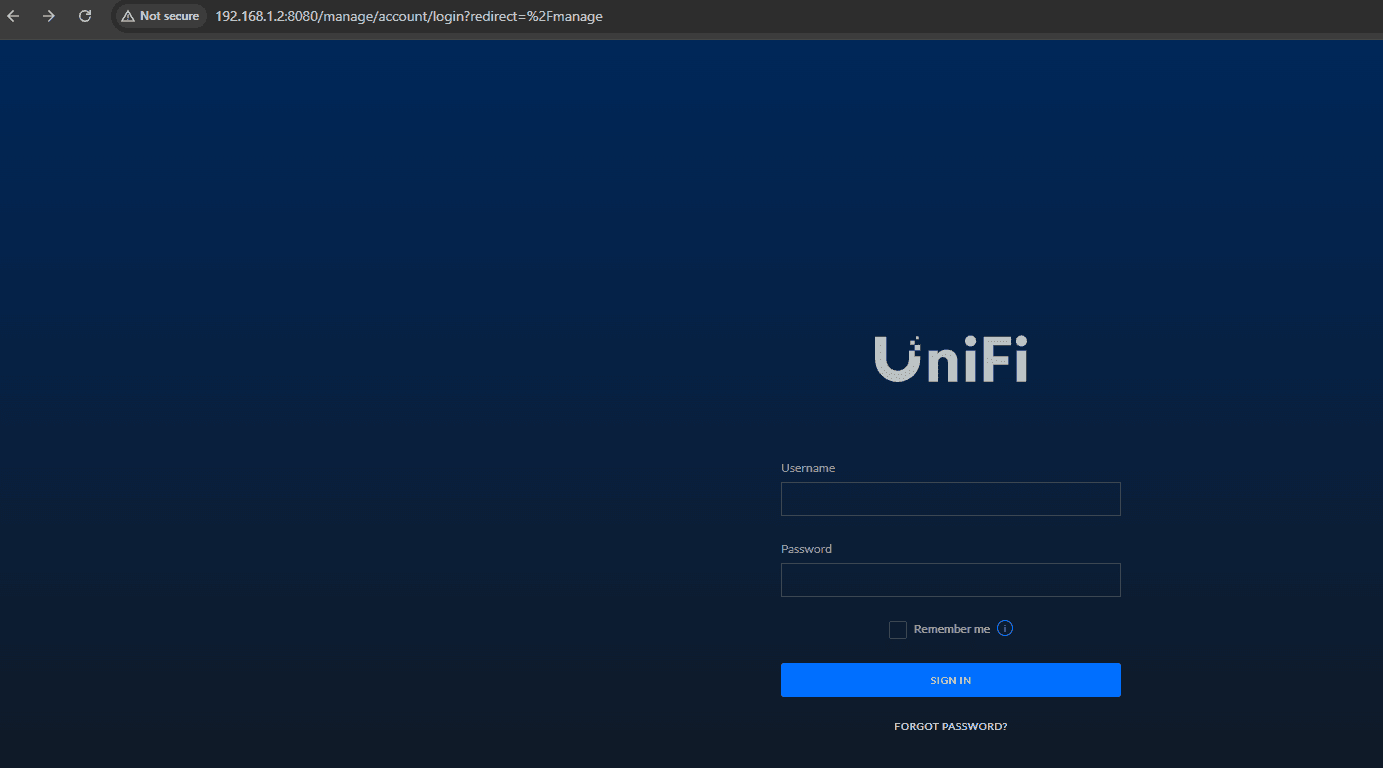
In my case, I access a standalone network app on my Windows PC. I can use either my loopback address , http://127.0.0.1:8080/manage/account/login or http://192.168.1.2:8080/ which is the IP of my Windows PC on the network. Note the port number, as you can see it’s 8080, for some hardware devices, it might be 80. These ports are used when the default self signed certificate is in place and you use HTTP to access the controller, however, this can be changed, and once a good certificate is in place, you might use port 443.
You might see your browser saying “this site is not secure” or “your connection is not private”! Don’t worry, you can just skip the warning. This happens because, by default, the UniFi Network App uses a self-signed certificate.
The login window will look like this:
Authentication Types: Local vs. UI SSO
Once you are at the login screen, there are two types of accounts you can use, depending on your initial setup:
- Local Credentials: As the name suggests, these are credentials managed entirely locally on the device.
- UI SSO (Single Sign-On): You likely set this method up, as it is the default whenever you configure a new controller. This method uses your Ubiquiti (UI) account to authenticate. A major benefit of UI SSO is that it prompts you for Two-Factor Authentication (2FA) every time you log in, adding a critical layer of security.
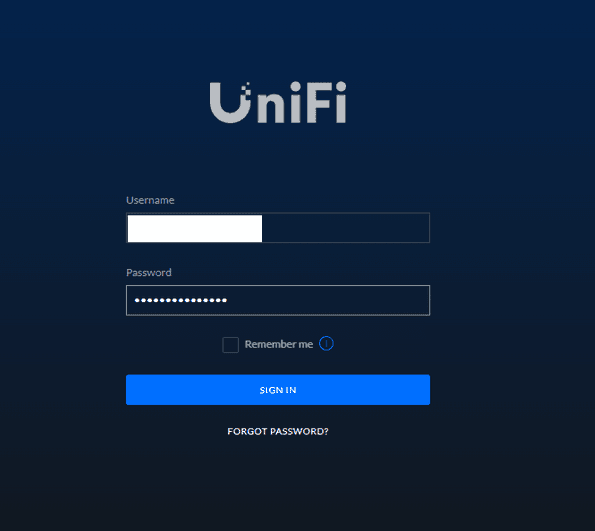
Go ahead and enter your credentials:
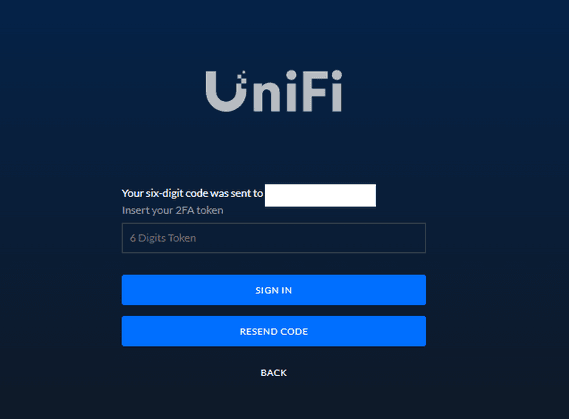
If you use the SSO method, a second login screen will appear asking for the 2FA code. By default, it uses your email for 2FA codes unless you’ve set up an authenticator app or another method:
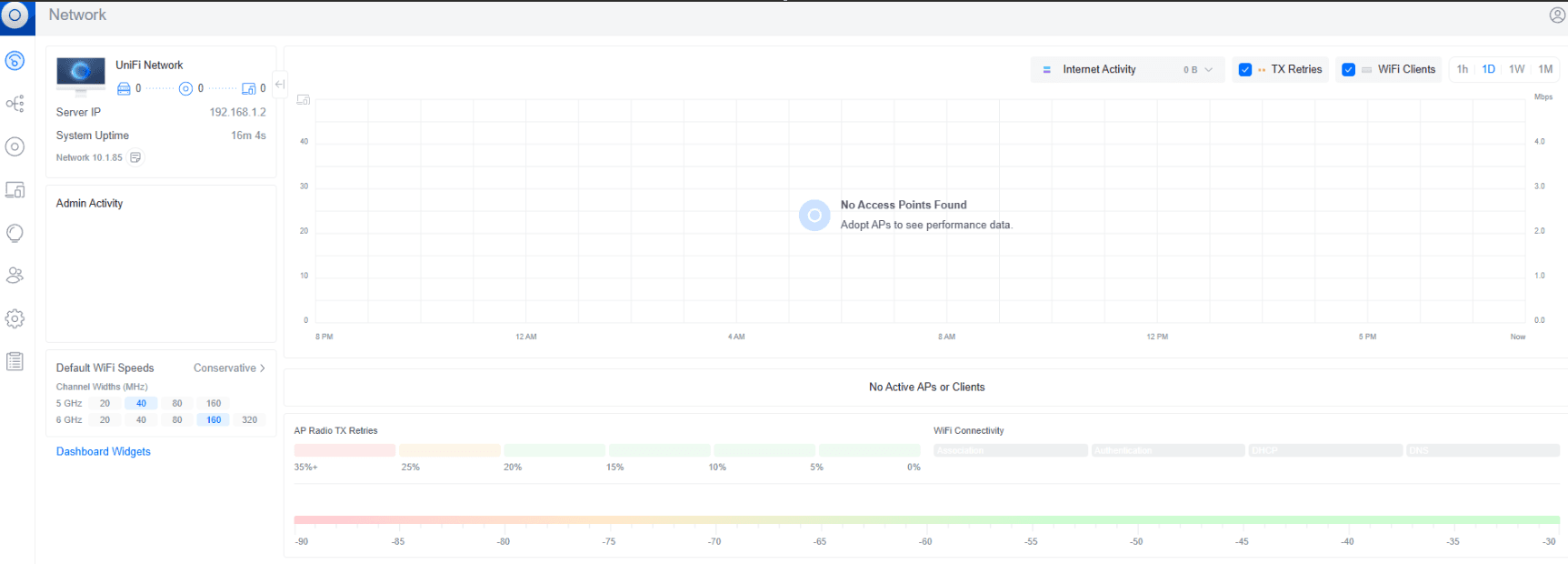
And that’s it! As soon as you are in, you should see your dashboard, like this:
Remote Management via Site Manager
If you want to access your network application from anywhere, without doing any kind of port forwarding, the Site Manager is your friend.
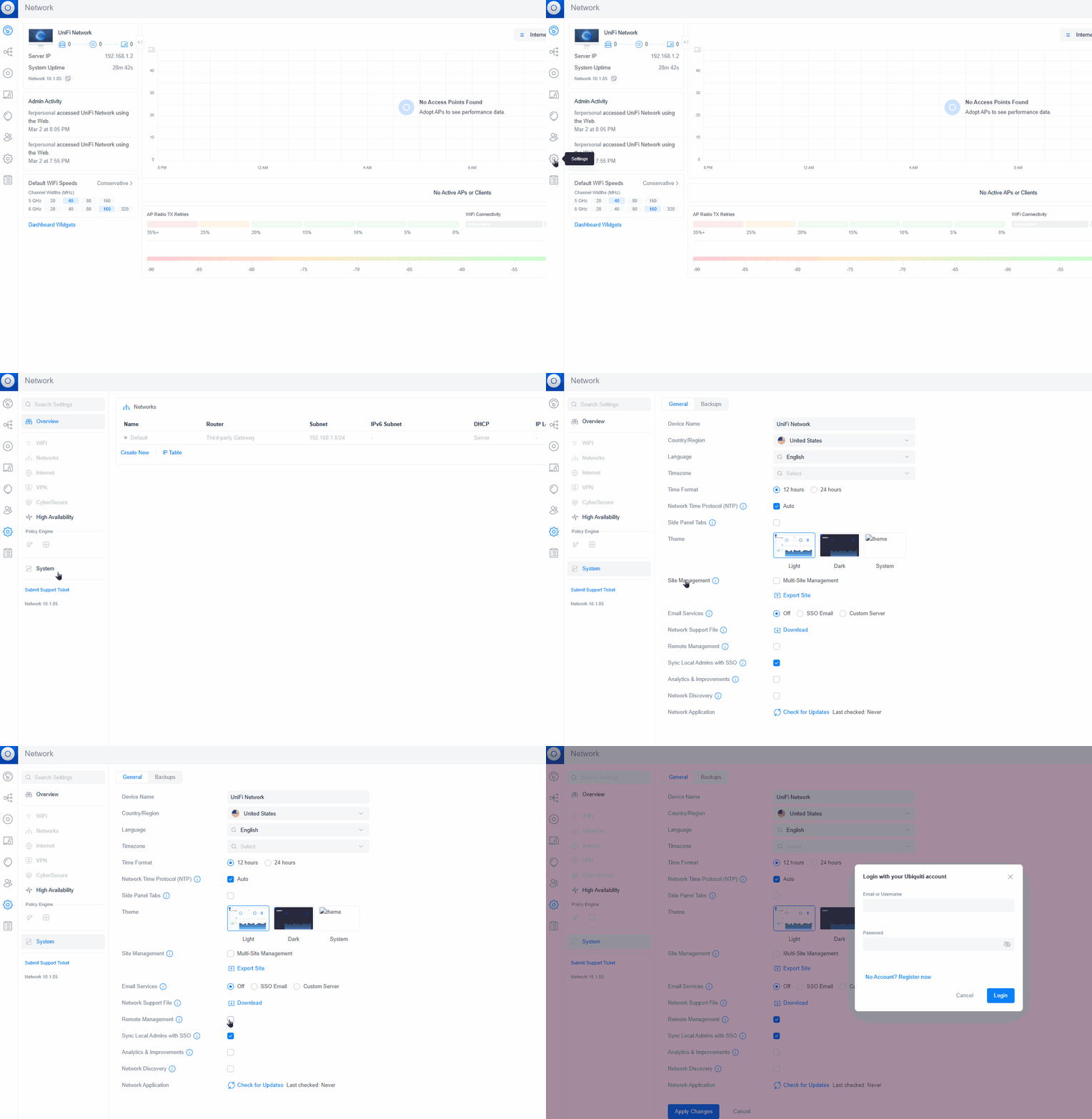
For this, we need to enable remote management in the Network App/UniFi OS. To do this:
- Open your Network Application/UniFi OS settings.
- Enable Remote Management.
- Enter your Ubiquiti/UniFi account credentials; you will be prompted for 2FA as well.
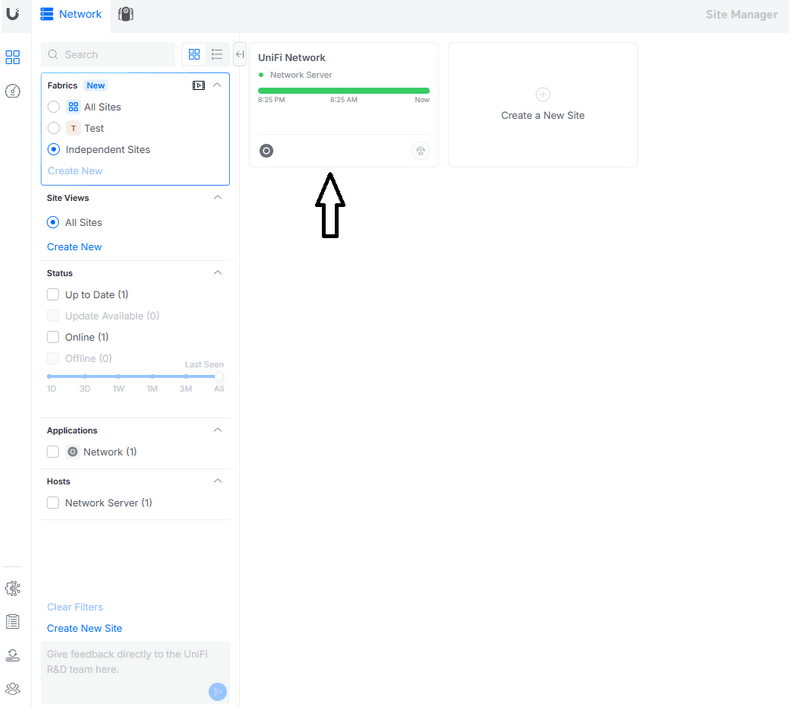
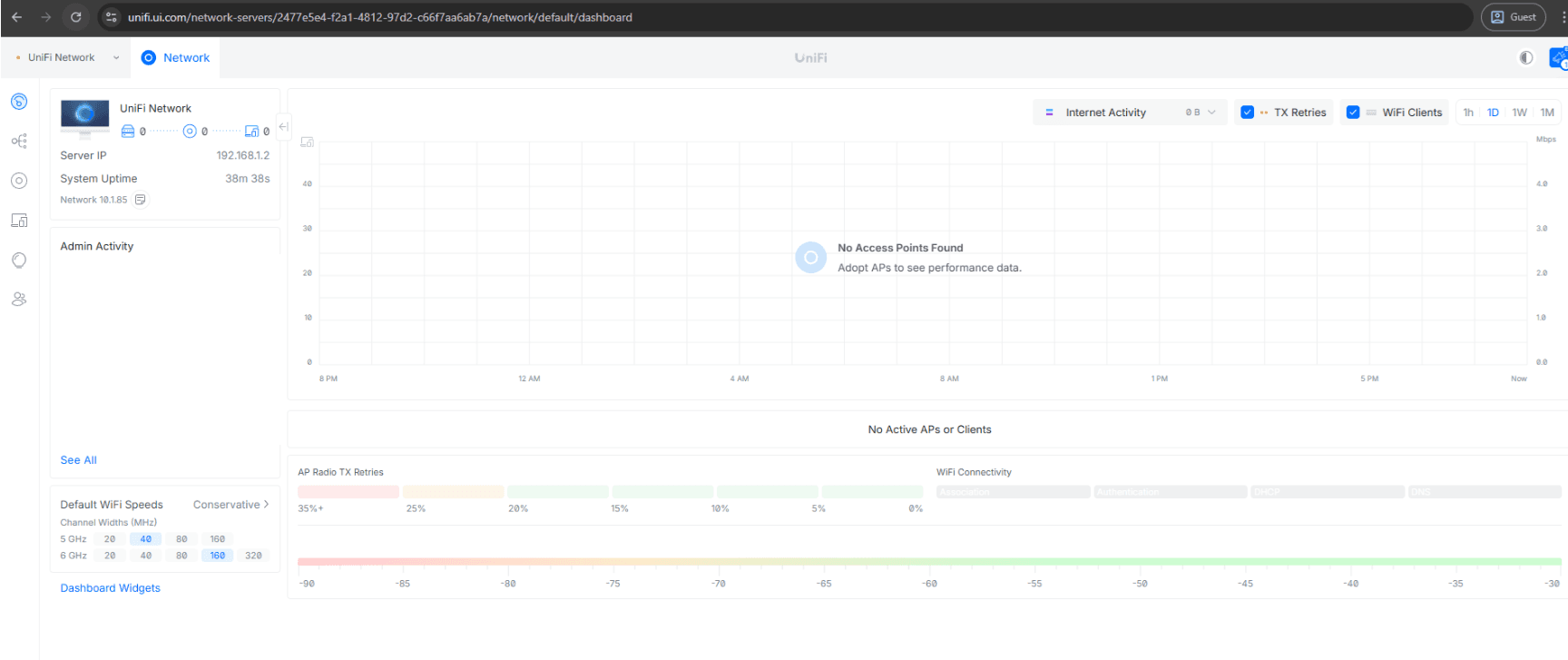
Once enabled, you can navigate to unifi.ui.com (Site Manager) and securely access your controller from anywhere.
If you currently use local management, you can still use this option. Keep in mind that it requires a UI account, so you will be prompted to set one up. The main local admin credentials will then be replaced by, or linked to, the UI account you use.
That’s it! Time to start configuring your UniFi devices.
When does Managed UniFi hosting make more sense?
Managing UniFi at scale introduces operational risk: inconsistent versions, manual backups, expiring certificates, and hardware failures. Many MSPs move to hosted UniFi controllers to centralize infrastructure while retaining full network control.